
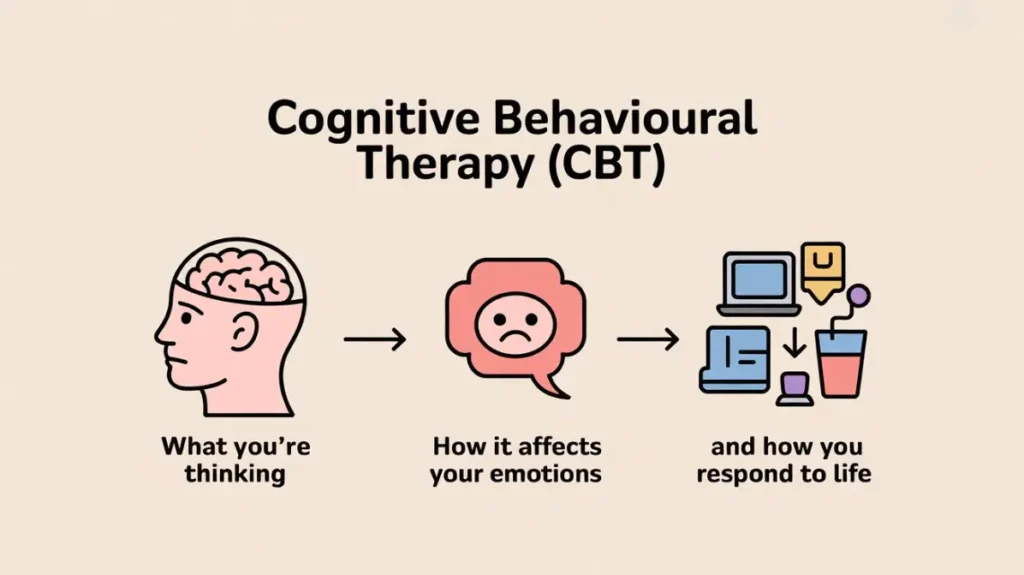
What CBT Looks Like in My Therapy Room—And Why It’s More Than Just “Changing Your Thoughts”
When someone in Gurgaon reaches out to me for therapy, they often say, “I’ve heard about CBT therapy in Gurgaon, but I don’t know if just changing my thoughts will help.”
And I always smile a little at that. Because yes—CBT works with thoughts. But it also works with your personality, your worldview, your emotional habits, and your deeper ways of relating to life.
It’s not just about “thinking better.” It’s about living better—with more awareness, flexibility, and self-trust. That’s how CBT helps with overthinking—it gives your mind tools to reset patterns, rather than just manage them.
CBT Gives Us Structure—but Not a Script
I value structure in therapy. CBT gives me a way to understand: what you’re thinking, how those thoughts were shaped by past experiences, what core beliefs and assumptions are operating quietly in the background, and how you’ve learned to cope—with or without support.
As a therapist, CBT helps me listen not just to your words, but to the meanings behind them. I hear the stories you’ve told yourself for years, sometimes without realising. I notice the patterns—your strengths, your self-sabotage—and I hold them gently until you are ready to look at them.
This is especially important for clients who seek therapy for overthinking in Gurgaon, where life often moves too fast to pause and reflect.
You are not your thoughts. You are the one observing them. This shift—from being inside the storm to noticing the storm—is where a lot of healing begins. It’s one of the quiet, transformative ways CBT helps with overthinking.
What I Often Say in CBT Session
I often ask my clients to: notice their thoughts in real-time or in reflection, track what triggered them, name the meaning they gave themselves in that moment.
And most importantly: To pause and ask—“Is this meaning helpful? Is it true? Or is it just familiar?”
That’s where CBT turns reflection into insight.
Let’s say you’re someone who avoids starting new projects out of fear that you’ll mess up.
Through CBT, we’d gently explore: what fear or belief is underneath that avoidance, where that belief came from, what that belief has cost you, and how we can begin to replace it with a more balanced, realistic one.
But we don’t stop at thoughts. We also strengthen your emotional coping, practice new behaviours, build your ability to tolerate discomfort and uncertainty, and repair your relationship with yourself.
This is where CBT becomes a whole-person process—not just a mental technique. For many who seek therapy for anxious overthinking, this is the turning point—they begin to feel calmer, clearer, and more capable.
What I Do, in My Own Words
If someone casually asked me what I do, I’d probably say: “I hear your stories, your beliefs, your labels—both the ones that lift you and the ones that hold you back. I help you see the strengths you’ve forgotten and the patterns you repeat. And when you’re ready, we practice the skills that help you cope better, relate better, and feel better—inside and out.”
CBT is not about “fixing” your thoughts. It’s about helping you understand yourself deeply, and build the emotional and psychological tools that help you adjust better to life—and feel more at peace within it.
Whether you’re struggling with stress, overthinking, low self-worth, or just feeling stuck—I’m here to walk alongside you.