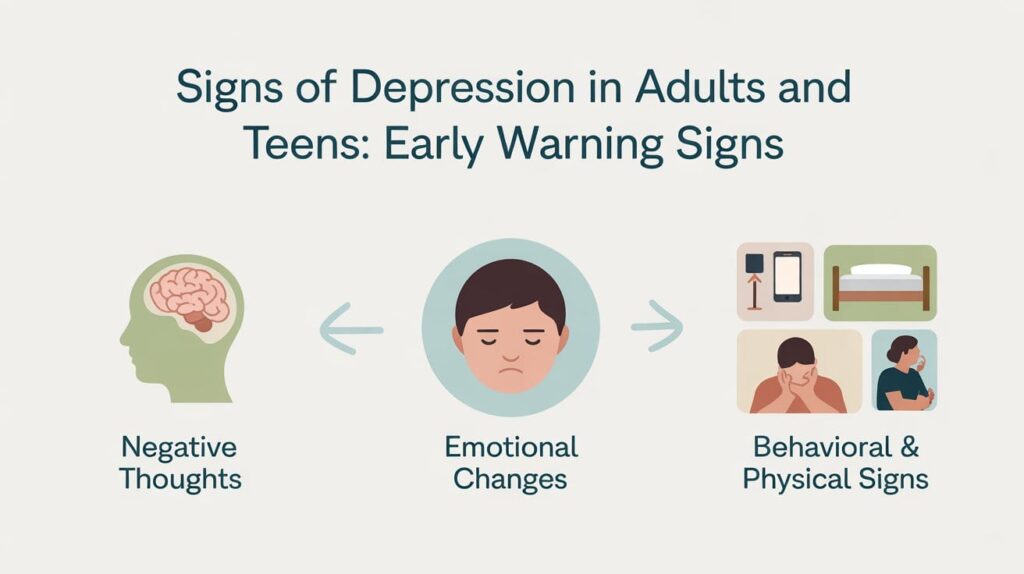
Signs of Depression in Adults and Teens: Early Warning Signs
The term “depression” does not simply refer to a single event (for example, a “bad day”); it represents a group ofmental health ailments within our society today. Most often associated with adults, there are also many children/teens suffering from this illness. Getting early identification and treatment enables an individual to receive rapid and effective assistance, as well as enhance their total quality of life.
Understanding Depression in Adults and Teens
Persistent feelings of sadness or emptiness are among the most commonly seen symptoms ofmental illness (depression) in adults and teenagers. People suffering from depression may experience prolonged periods of feeling hopeless, helpless, or emotionally detached from the world around them. Mood swings, irritability, and guilt are also common emotional indicators of depression, particularly in adolescents who sometimes display anger and withdrawal rather than sadness.
Behavioral and Physical Warning Signs
Depression can also manifest itself through changes in an individual’s usual behavior patterns. Adults and adolescents may have lost interest in socializing and performing work or other responsibilities. In addition, sleep disturbances, whether insomnia or excessive sleeping, occur frequently with this illness; so too do many common physical symptoms such as fatigue, headache, and unexplained body pain.
In addition, changes in the amount of food consumed (either less to no food consumed or emotional overeating) may signal depression. Finally, individuals who are depressed tend to be easily distracted and have trouble concentrating; their academic (or occupational) performance may decline noticeably
Signs of Depression in Teens to Watch For
While all forms ofdepression can be distinguished by their different expressions, it is common for adolescents and young adults to demonstrate these signs. These behaviors include deteriorating academic performance, increased use of sedentary activities, withdrawing from social interaction, or exhibiting changes in behavior that are abrupt or inexplicable. As with adults, the expression of worthlessness is common in adolescents; as such, expressions from adolescents of this nature should never go ignored.
When to Seek Professional Help
Reach out to someone professionally if these symptoms continue to last longer than two weeks or if they start affecting your daily functioning. Receiving treatment as early as possible can stop the progression of symptoms and help an individual learn adaptive skills on how best to handle situations when faced with them.
Final Thoughts
Understanding the symptoms of depression in men and women and in young men and women will first help you understand thatdepression can be managed through treatment. Seeking assistance for a mental health issue requires strength to move forward in life and is a means of increasing emotional balance, as well as increasing the quality of life for adults and children.