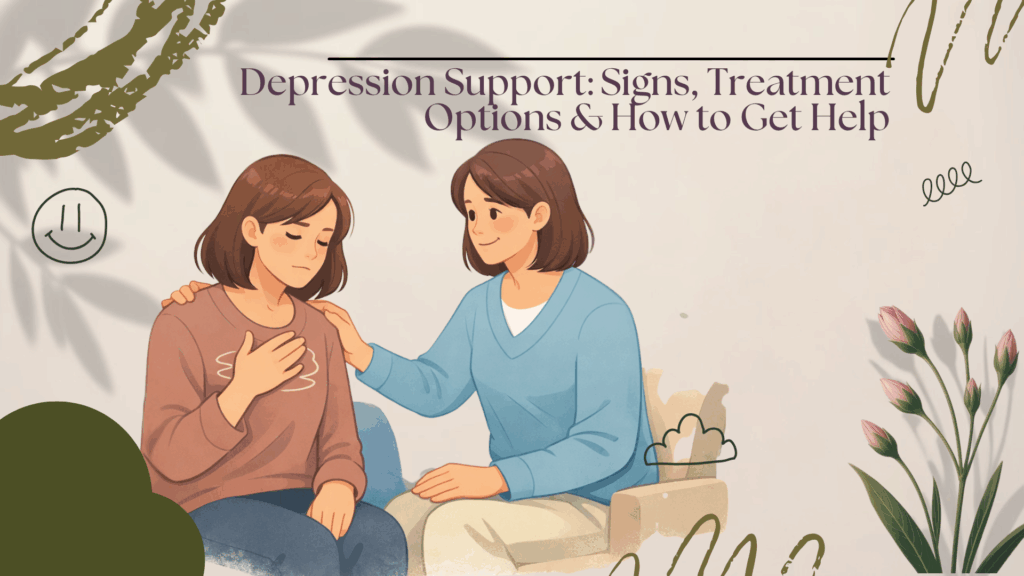
Depression Support: Signs, Treatment Options & How to Get Help
Depression is not a simple case of sadness over several days but rather a severe mental disorder that may impact how one thinks, feels, acts and even how they perform their daily activities. Timely Depression Support can help achieve a significant improvement in the process of recovery and good health. This guide answers common questions about symptoms of depression, the existing treatment methods, and the ways of seeking professional help
Understanding Depression and the Need for Support
Depression affects anybody, irrespective of age and background. It can take time to manifest itself and can be unnoticeable initially. Depression Support provides the audience with the knowledge about their emotional condition, coping with symptoms, and returning their lives to normal with the help of professional assistance and organized treatment.
Common Signs and Symptoms of Depression
The early symptoms recognition is a significant move towards Depression Support.
Emotional Symptoms
>Persistent sadness or emptiness
>Feelings of hopelessness or worthlessness
>Loss of interest in activities once enjoyed
Physical Symptoms
>Fatigue or low energy
>Changes in sleep patterns (insomnia or oversleeping)
>Appetite changes and unexplained weight loss or gain
Behavioral and Cognitive Symptoms
>Difficulty concentrating or making decisions
>Withdrawal from social activities
>Irritability or restlessness
In case when these symptoms persist over two weeks and disrupt everyday living, professional Depression Support should be offered.
Effective Treatment Options for Depression Support
The problem of depression has no one-size-fits-all answer. The treatment plans can be designed on a case-by-case basis.
Therapy and Counseling
Common types of Depression Support include talking therapies, including the Cognitive Behavioral Therapy (CBT). Therapy assists people to discover the negative thought patterns, learn coping skills and learn how to control their emotions better.
Medical Treatment
Medication may be used in some cases by a medical provider to help with brain chemistry imbalances; many times it is used in conjunction with therapy to provide the most positive outcome possible.
Lifestyle and Self-Care Support
Some of the best ways to recover from depression are through implementing healthy habits into your daily life (like healthy eating, exercise, and establishing regular sleeping patterns), while practicing mindfulness, and receiving Professional Support for Depression.
How to Get the Right Depression Support
Everyone will find help in different ways. Here’s a checklist to help you find a qualified mental health practitioner:
>Speak with your mental health professional about his/her/their qualifications.
>Determine whether to pursue therapy through an online platform (e.g., Skype), in-person practice, or both depending on what feels most comfortable for you.
>Ask what type of treatment they offer and the goals of each approach.
Getting support early can greatly decrease the intensity of depressive symptoms as well as improve overall mental health in the future.
Why Seeking Depression Support Is Important
The neglect of depression may result in the aggravation of symptoms and influence the relations, occupation, and physical well-being. Seeking Depression Support is not a metaphor to show weakness; it is a step to heal and take care of oneself.
Conclusion
Depression is not a hopeless case and can be cured with the appropriate Depression Support. Early identification of symptoms, knowledge of treatment and professional advice can enable people to be hopeful and emotionally stable. In case of experiencing trouble, or knowing of someone who is experiencing it, seeking help is relevant as the first step towards a healthier future.