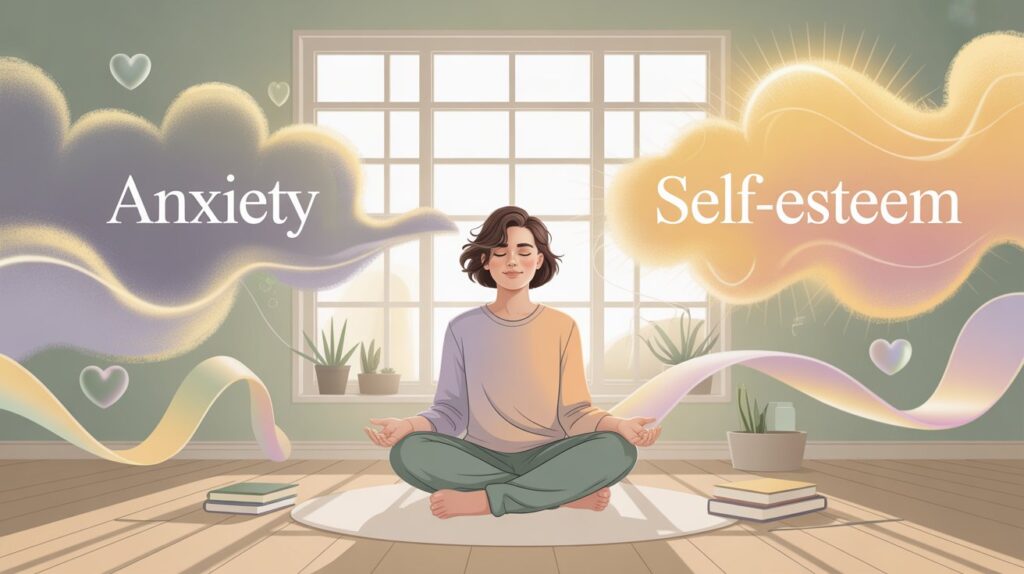
The Vital Connection: How Improving Self-Esteem Lowers Anxiety
The connection between the way we view ourselves and the way we feel the world is one of the most important foundations of psychological well-being. Vast experience in behavioral science indicates that the process of enhancing self-esteem is not just an activity of feeling good; it is an operative approach to reducing anxiety. When a person can create a less critical and more empathetic understanding of his or her value, the brain’s perception of stress and social comparison will be altered essentially. Furthermore, this relationship highlights the importance of understanding self-esteem and anxiety. The relationship between self-esteem and anxiety is crucial for personal development.
Understanding the Psychological Buffer
Vast experience in behavioral science indicates that the process of enhancing self-esteem is not just an activity of feeling good; it is an operative approach to reducing anxiety. When a person can create a less critical and more empathetic understanding of his or her value, the brain’s perception of stress and social comparison will be altered essentially. This self-critic generates a state of perpetual hypervigilance in which each social interaction or work-related experience becomes an evaluation of their worth. Through the enhancement of self-esteem, the person starts to internalize their value, hence no longer requiring external validation. As a result, everyday life stakes get reduced, which directly affects the physiological and mental manifestation of anxiety.
The interplay between self-esteem and anxiety cannot be understated, as cultivating a strong sense of self-worth directly influences anxiety levels.
Understanding the dynamics of self-esteem and anxiety can empower individuals to make informed choices that enhance their quality of life.
Understanding the connection between self-esteem and anxiety is crucial for personal development and mental health.
Core Strategies for Building Confidence
Self-compassion and emotional resiliency are part of the process that should be developed. With good self-esteem, failures will be seen as short-time failures rather than a reflection of one’s character. Such a change of outlook averts the anxiety spiral whereby an error results in apocalyptic reasoning. Additionally, self-esteem is a psychological cushion, as it enables people to cope with uncertainty with a sense of self-efficacy or with the belief that one is capable of facing the challenges ahead. Understanding the link between self-esteem and anxiety is crucial for personal growth.
Key Benefits of Enhancing Self-Worth:
Lower Social Sensitivity: More self-esteem means a person will be less attuned to social cues or less afraid of being judged, resulting in a less tense interaction.
Decisive Action: Being sure about one judgment minimizes the analysis paralysis, which is a characteristic of high anxiety states.
Better Recovery: Greater self-worth will permit faster recovery of emotions after a stressful experience or personal rejection.
Boundary Setting: High self-esteem makes one confident in saying no so that one is not anxious about overcommitment and people-pleasing.
Practicing Cognitive Reframing
Cognitive reframing has to be used to start the process of reducing anxiety in terms of self-worth. This is done by determining the negative ways of thinking and substituting them with evidence-based balanced affirmations. With time, the mental health becomes reinforced, and an individual gains a sense of self-confidence, and this leads to a positive-feedback loop: the less the anxiety a person experiences, the more he/she will develop self-confidence to take risks, which further boosts his/her self-esteem.
The process of cognitive reframing should be exercised in order to start reducing anxiety through the prism of self-worth. This will entail the establishment of negative thought processes and substituting them with balanced, evidence-based affirmations. With time, such practices enhance mental well-being and lead to self-confidence, which creates a positive feedback mechanism where the less anxious a person is, the more he/she believes she can take risks, and as a result, this further earns the person self-esteem.