Healthy Habits That Support Emotional Well-Being
Making good choices in our lives has a direct influence on how emotionally healthy we are today. In our fast-paced, hectic world full of pressure, it is common for people to feel stressed and/or mentally exhausted. The development of many small, consistent habits over time can profoundly affect how we handle adversity and maintain a sense of equilibrium in our minds. The development of healthy lifestyles is crucial to our emotional well-being, not only physically but also in building emotional strength and resilience.
1. Prioritize Quality Sleep
The quality of sleep can affect emotional balance. Sleep that is not sufficient or regular can result in increased levels of anxiety, irritability and problems with focus. To achieve a positive impact on one’s overall mood as well as greatly improved emotional clarity and stability as a part of an overall healthy lifestyle, it is important to establish a regular sleep schedule, limit exposure to screens prior to bedtime, and establish a calm environment in which to sleep.
2. Maintain Balanced Nutrition
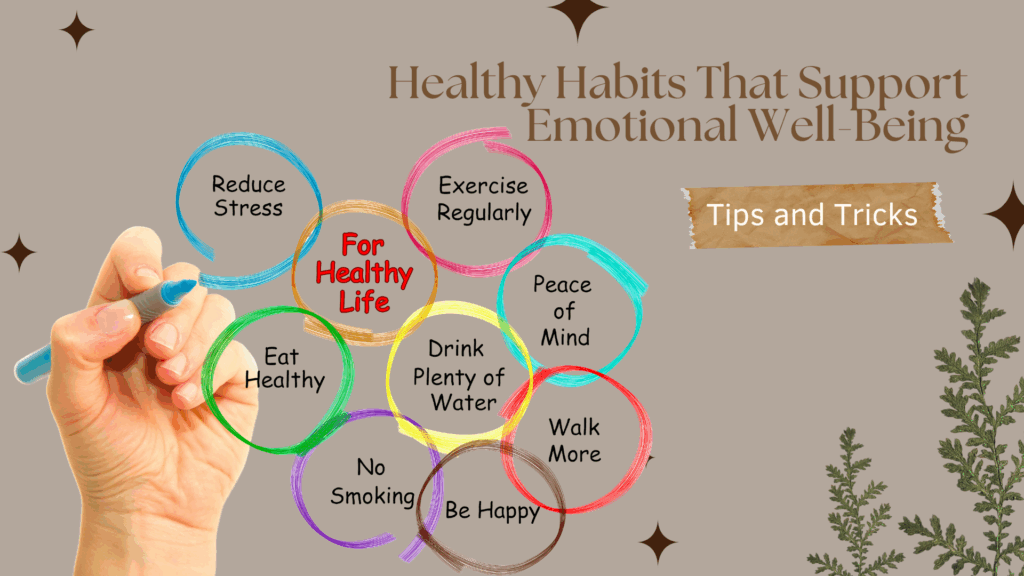
Nutrition can directly affect Emotional Wellness. A balanced diet that is high in fruit, vegetables, whole grains, and healthy fats helps with brain function and emotional wellness. The restriction of excessive sugar, caffeine and processed foods will help prevent mood swings and energy crashes.
3. Stay Physically Active
Engaging in physical activities on a regular basis generates the production of endorphins, which enhance a person’s mood and help alleviate stress in an individual. Simple physical activities (such as walking, stretching, and yoga) can provide emotional benefits when they are performed consistently; they do not have to be high-intensity workouts.
4. Practice Mindfulness and Self-Awareness
Mindfulness teaches you to accept how you think and feel without passing judgment on either. Deep breathing, meditation, or writing can help create a buffer between your emotional state(s) and what you are experiencing. Practicing self-awareness gives you the ability to think before you act, which will help create a healthy emotional state over time.
5. Build Healthy Social Connections
The connection between strong relationships and the emotional support they provide can assist in creating a feeling of belonging. When people spend time with friends/family members or their community who support them, this helps decrease feelings of loneliness and improves their emotional health as part of a healthy lifestyle.
6. Set Healthy Boundaries
To maintain emotional energy, it is important to set limits related to work, relationships and screen time; saying ‘no’ properly and taking breaks can help prevent burnout and create emotional balance.
7. Manage Stress in Healthy Ways
Stress is a very common experience among all the individuals, and being emotionally healthy does include having a positive approach to your stress. Some of the healthy stress management practices, such as relaxation strategies, time management and dedicating time to rest regularly, can be utilized to minimize the magnitude of the stress you experience and enhance your capacity to recover emotionally after a challenge.
Conclusion
Without radical alterations in the lifestyle, emotional well-being can be improved. It is important to understand that you can strengthen your emotional strength and become a better person by creating a set of simple daily activities and introducing healthy habits into your everyday life. Nonetheless, in case emotional challenges remain challenging to manage, a professional of a psycho-physical nature can possibly provide you with supportive and meaningful help.